
2026 Rookie Card Market Snapshot
The 2026 rookie card market is defined by a sharp divergence in liquidity and speculative heat. While the broader hobby experiences seasonal fluctuations, the influx of high-profile draft prospects and early-season NBA rookies has created a concentrated surge in demand. Investors and collectors are prioritizing early identification of top-tier talent, treating these cards not merely as memorabilia but as volatile assets subject to rapid price discovery.
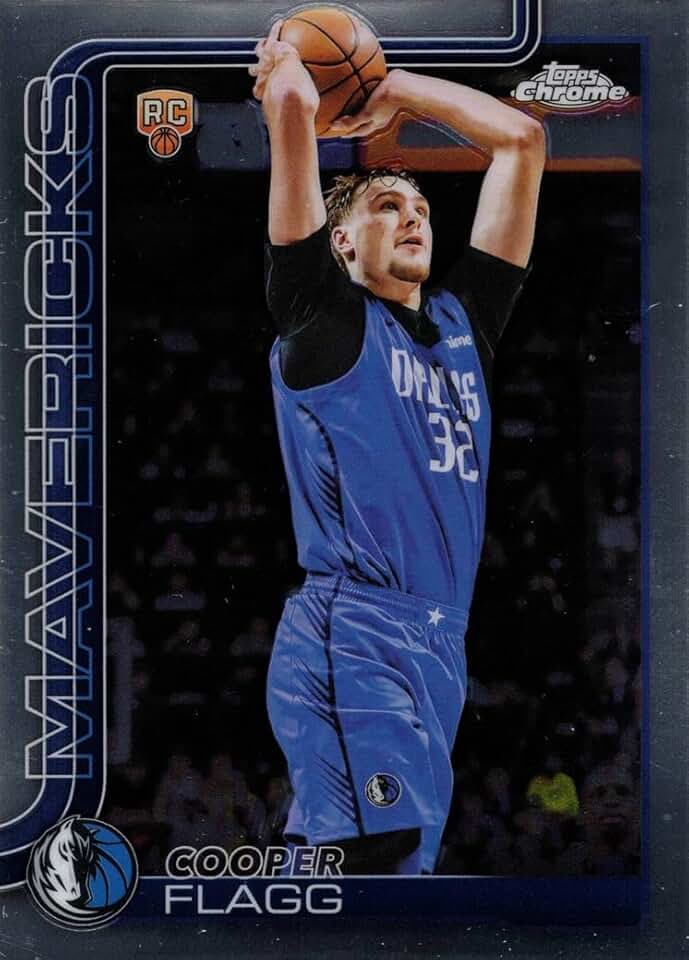
Cooper Flagg’s 2025-26 Topps Chrome Rookie Card currently anchors this trend, serving as the single most-talked-about rookie card across all sports. Its prominence reflects a broader shift toward premium inserts and parallel variants, where scarcity drives premium pricing. This dynamic is visible across NFL, NBA, and MLB releases, where base cards provide entry points, but limited-edition subsets offer the primary vehicle for capital appreciation.
Market Note: 2026 rookie cards are seeing heightened liquidity due to early draft and prospect hype.
This environment requires disciplined entry points. Buying into the hype without understanding the underlying set distribution can lead to overvaluation. The market rewards those who distinguish between genuine prospect potential and marketing-driven speculation. As the season progresses, only cards with verified scarcity and strong player performance will retain value, making the initial acquisition phase critical for long-term portfolio health.
Top NBA rookie cards to watch
The 2025-26 NBA season introduces a generational prospect in Cooper Flagg, whose collegiate dominance has already established him as the primary anchor for rookie card valuations. As the most anticipated draft class in recent memory, Flagg’s presence drives significant liquidity in the hobby, particularly within the 2025-26 Topps Chrome and Prizm series. Investors tracking high-ceiling assets should monitor these base and refractor parallels, which serve as the most liquid entry points for long-term portfolio growth.
Beyond the headline name, the market is pricing in depth across the top ten draft picks. High-grade examples of players like Zaccharie Risacher and Alex Sarr are commanding premium bids due to their projected starting roles in high-market franchises. The 2025-26 Panini Select and Optic sets offer competitive pricing for these secondary targets, providing a balanced risk-to-reward profile for collectors diversifying beyond the single-player spotlight.
The broader sports trading card market is expanding, with basketball maintaining its share of high-volume transactions as the sector grows toward 2035. This macro-trend supports the liquidity of rookie cards, ensuring that entry-level positions in top prospects remain accessible. For buyers, the current window offers a strategic opportunity to acquire these assets before the official draft solidifies long-term price floors.


As an Amazon Associate, we may earn from qualifying purchases.
Best MLB rookie cards for 2026
The 2026 Topps baseball set continues to define market baselines for rookie investments. While the broader market fluctuates, specific prospects from Series 1 and Series 2 offer tangible entry points for collectors seeking long-term value. Roman Anthony and Cam Schlittler have emerged as the primary anchors for this cycle, commanding attention due to their established prospect rankings and immediate major-league readiness.
Roman Anthony represents the high-ceiling play in the current landscape. As a top-tier outfield prospect, his card distribution in Topps Series 1 and 2 provides multiple avenues for acquisition. The market dynamics favor early-series inserts, where scarcity often drives premium pricing. Collectors are advised to focus on base cards and low-numbered parallels to balance risk against potential appreciation. His performance trajectory will directly influence liquidity in the secondary market.
Cam Schlittler offers a contrasting value proposition. A pitcher with elite strikeout potential, Schlittler’s rookie cards in Series 2 are currently undervalued relative to position players. Historical data suggests that top pitching prospects often see delayed but sustained price growth once they secure rotation roles. This lag creates a window for strategic accumulation before broader market recognition occurs.

As an Amazon Associate, we may earn from qualifying purchases.
NFL rookie cards from the 2026 draft
The immediate post-draft window for NFL rookies operates on a different timeline than baseball or basketball. Collectors face a compressed launch cycle where Topps NOW cards serve as the primary entry point for immediate gratification, while base set rookies follow weeks later. This dynamic creates a distinct market for NFL cards from the 2026 draft, characterized by rapid price discovery and high volatility.
Topps NOW cards are minted in real-time, often within seconds of a player being selected or making a notable play. These inserts capture the raw energy of the draft night but lack the polished presentation of standard base cards. For investors, the risk is higher; the supply is often limited, but the secondary market can be unpredictable. The value proposition here is speculative, driven by the novelty of owning a piece of history as it unfolds.
Base set rookies, released shortly after the draft concludes, offer a more stable foundation for a collection. These cards are part of larger, cohesive sets that provide context and longevity. While the initial hype may fade faster for NOW cards, base rookies tend to hold their value better over time, especially for first-round picks. The market for these cards is more established, with clearer pricing trends and a larger pool of potential buyers.
For those looking to build a portfolio of NFL rookie cards from the 2026 draft, focusing on high-profile first-round picks in both NOW and base formats is a common strategy. The following products represent the current market offerings for these key rookies.


As an Amazon Associate, we may earn from qualifying purchases.
How to buy 2026 rookie cards safely
The 2026 rookie card market is moving fast, and with it comes the risk of counterfeit products and inflated prices. Buying high-value cards requires more than just a credit card; it demands a verification process that protects your capital. Treat every purchase like a financial transaction where due diligence determines your return on investment.
Verify the Source
Only buy from sellers who provide verifiable proof of authenticity. For high-end rookies, this means third-party grading from PSA, BGS, or SGC. Never accept a "raw" card from an unknown seller without a clear return policy and high-resolution images of the corners and edges. If a deal looks too good to be true, it likely is. Stick to established marketplaces or reputable dealers with long-standing track records.
Check Market Value
Prices for 2026 rookies are still forming. Use platforms like Sportscardspro to track real-time sales data for specific sets, such as the 2026 Topps Stars of MLB rookies. Do not rely on listing prices; look at completed sales to understand what buyers are actually paying. This data helps you avoid overpaying during the initial hype cycle and identifies cards with genuine market traction.
Inspect Condition Closely
Even graded cards can be misrepresented. Request additional photos of the slab, including the label and barcode, to ensure the grading company’s seal is intact. For ungraded cards, check for whitening on the edges and centering issues. A card with poor centering or edge wear will not hold its value, regardless of the player’s fame. Your goal is to acquire assets that appreciate, not liabilities that depreciate.
No comments yet. Be the first to share your thoughts!